
Académicos
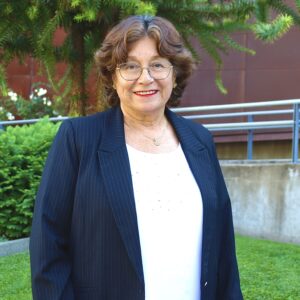
Dra. Patricia Arancibia
Directora del programa Magister en Ciencias Bilógicas.
Licenciada en Biología de la Universidad de Concepción.
Ph.D. en Oceanografía y Limnología de la Universidad de Wisconsin-Madison, Estados Unidos.
ORCID: 0000-0002-5814-1725
Área de investigación:
Ecofisiologia de algas y briófitas
Antioxidantes en relación con contaminación ambiental
Limnología
Educación de las ciencias
Laboratorio de Ecofisiologia vegetal y microalgas
Contacto:
parancib@ubiobio.cl / +56-42-2463120
Publicaciones 2021 – 2026
2026
Barasch, D., Nemirovski, A., Merquiol, E., Deutsch, J., Huang, D., Thobunluepop, P., Martinez-Ayala, A. L., Arancibia-Avila, P., Toledo-Montiel, F., Paśko, P., et al. (2026). Molecular interactions and antioxidant properties of white wine phytochemicals: A mechanistic study of serum protein binding. Biomolecules, 16(8), 1153. https://doi.org/10.3390/biom16081153
Bieg, F., Galanty, A., Arancibia-Ávila, P., Gorinstein, S., & Paśko, P. (2026). Content of vitamin D2 in alternative biological and nutritional sources and its effectiveness as compared to vitamin D3—A narrative review. Metabolites, 16(7), 485. https://doi.org/10.3390/metabo16070485
2025
Jara-Zapata, P., Arancibia-Ávila, P., Valladares, M. A., Torres-Díaz, C., Pastene, E., & Reyes-Quinteros, N. (2025). Bioprospecting of Chilean Labyrinthulomycetes: Laboratory evaluation of PUFA and carotenoid production in isolates from diverse natural environments. Journal of Eukaryotic Microbiology, 72(5), e70035. https://doi.org/10.1111/jeu.70035
Jara-Zapata, P., Arancibia-Ávila, P., Valladares, M. A., Torres-Díaz, C., Pastene, E., & Reyes-Quinteros, N. (2025). First record of Aplanochytrium on the Chilean coast and its biotechnological potential: Expanding the geographic distribution of Labyrinthulomycetes. Journal of Eukaryotic Microbiology, 72(2), e70007. https://doi.org/10.1111/jeu.70007
Reyes-Quinteros, N., González-Saldía, R., Leal-Medina, C., Jara-Zapata, P., & Arancibia-Ávila, P. (2025). Persistence of microcystin-LR in a warm monomictic lake under anthropogenic pressure in south-central Chile. Environmental Monitoring and Assessment, 197(12), 1320. https://doi.org/10.1007/s10661-025-14782-0
Vega Román, E. A., Arancibia Ávila, P., & Anabalón, Y. (2025). Impacto del estilo de enseñanza docente en el aprendizaje procedimental en estudiantes universitarios chilenos. Revista de Estilos de Aprendizaje, 18(35), 14–25. https://doi.org/10.55777/rea.v18i35.5048
Herrera-Rodríguez, N., Arancibia-Ávila, P., & Reyes-Quinteros, N. (2025). Estado del conocimiento de la fauna en turberas de Sphagnum (Bryophyta: Sphagnaceae): Diversidad, ecología y desafíos en Chile. Acta Zoológica Lilloana, 69.
2024
Rivera-Ruiz, D., Arumí, J. L., Lillo-Saavedra, M., Esse, C., Arancibia-Ávila, P., Urrutia, R., Portuguez-Maurtua, M., & Ogashawara, I. (2024). Secchi depth retrieval in oligotrophic to eutrophic Chilean lakes using open access satellite-derived products. Remote Sensing, 16(22), 4327. https://doi.org/10.3390/rs16224327
Dospital, C., Arancibia-Avila, P., & Araneda-Flores, J. (2024). Epidemiological profile of Hantavirus in the Ñuble region period 2002–2018, Chile. Brazilian Journal of Biology, 84, e269097. https://doi.org/10.1590/1519-6984.269097
2023
Vasquez-Sandoval, C., Navarrete, J., Herrera-Herrera, P., Dantagnan, P., Diaz-Navarrete, P., Arancibia-Avila, P., & Oviedo, C. (2023). Screening and identification of coastal Chilean thraustochytrids for arachidonic acid production: Biotechnological potential of Ulkenia visurgensis Lng2-strain. Microorganisms, 11(3), 559. https://doi.org/10.3390/microorganisms11030559
2022
Satjarak, A., Graham, L. E., Trest, M. T., & Arancibia-Avila, P. (2022). Plastid genome of Equisetum xylochaetum from the Atacama Desert, Chile and the relationships of Equisetum based on frequently used plastid genes and network analysis. Plants, 11(7), 1001. https://doi.org/10.3390/plants11071001
Satjarak, A., Graham, L. E., Trest, M. T., Zedler, J., Knack, J. J., & Arancibia-Avila, P. (2022). Nitrogen fixation and other biogeochemically important features of Atacama Desert giant horsetail plant microbiomes inferred from metagenomic contig analysis. Annals of Botany, 130(1), 65–75. https://doi.org/10.1093/aob/mcac060
Apak, R., Calokerinos, A., Gorinstein, S., Segundo, M. A., Hibbert, D. B., Gülçin, İ., Demirci Çekiç, S., Güçlü, K., Özyürek, M., Çelik, S. E., Magalhães, L. M., & Arancibia-Avila, P. (2022). Methods to evaluate the scavenging activity of antioxidants toward reactive oxygen and nitrogen species (IUPAC Technical Report). Pure and Applied Chemistry, 94(1), 87–144. https://doi.org/10.1515/pac-2020-0902
2021
Satjarak, A., Graham, L. E., Piotrowski, M. J., Trest, M. T., Wilcox, L. W., Cook, M. E., Knack, J. J., & Arancibia-Avila, P. (2021). Shotgun metagenomics and microscopy indicate diverse cyanophytes, other bacteria, and microeukaryotes in the epimicrobiota of a northern Chilean wetland Nostoc (Cyanobacteria). Journal of Phycology, 57(1), 39–50. https://doi.org/10.1111/jpy.13084
Flores-Morales, G., Díaz, M., Arancibia-Avila, P., Muñoz-Carrasco, M., Jara-Zapata, P., Toledo-Montiel, F., & Vega-Román, E. (2021). Removal of nutrients from organic liquid agricultural waste using filamentous algae. Brazilian Journal of Biology, 81(3), 544–550. https://doi.org/10.1590/1519-6984.224708